
 How to Keep Your Concrete Looking Great and Lasting Longer
Concrete is one of the toughest materials around your home, but that doesn’t mean it’s maintenance-free.
Driveways, sidewalks, patios, porches, and other concrete surfaces spend every day exposed to rain, snow, ice, dirt, leaves, vehicles, and everything else Wisconsin weather can throw at them.
Over time, a clean concrete surface can become stained, discolored, uneven, or cracked.
The good news is that a little regular maintenance can go a long way toward keeping your concrete looking good and catching problems before they get worse.
Start With Regular Concrete Cleaning
You probably don’t notice your concrete getting dirty because it happens slowly.
Dirt, grime, leaves, algae, vehicle residue, and other contaminants gradually build up. After a few years, homeowners sometimes forget how much brighter their driveway or patio used to look.
Professional pressure washing can remove much of this surface buildup and bring back a cleaner appearance without replacing the concrete.
This can make a particularly noticeable difference on:
- Driveways
- Front walkways
- Sidewalks
- Patios
- Concrete porches
- Pool decks
- Concrete steps
Keeping these surfaces clean doesn’t just improve curb appeal. Cleaning your concrete also gives you an opportunity to take a closer look at its condition.
Cleaning Can Reveal Problems You Didn’t Notice Before
Dirt and discoloration can sometimes make it difficult to see what’s actually happening with a concrete surface.
Once it’s clean, take a walk around the area.
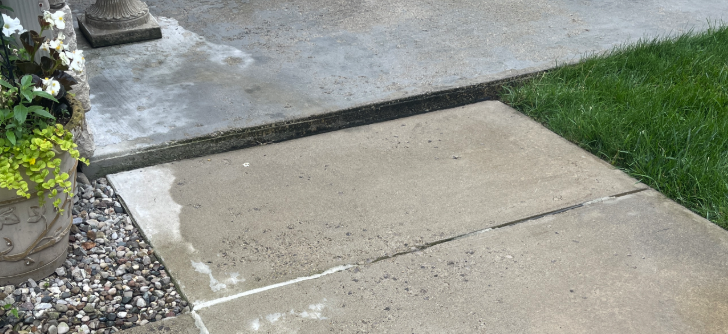
Look for cracks, gaps between slabs, low spots, and places where two neighboring slabs are no longer level with one another.
Some small cracks may simply be something to monitor. However, a noticeable height difference between slabs may indicate that part of the concrete has settled.
This is particularly important on sidewalks and walkways where an uneven slab can create a trip hazard.
Why Does Concrete Sink?
Concrete is heavy, but the slab itself isn’t always the source of the problem.
What’s underneath it matters just as much.
A concrete driveway, sidewalk, or patio depends on the soil beneath it for support. If that soil settles, shifts, or washes away, empty spaces can develop underneath the concrete.
Without proper support, the slab may begin to sink or tilt.
Wisconsin’s weather doesn’t make things any easier. Our properties experience rain, snow, freezing temperatures, thawing, and changing soil conditions throughout the year.
Over time, you may notice one section of a sidewalk sitting lower than another or a driveway slab beginning to slope.
Pressure Washing vs. Concrete Repair
It’s important to know what pressure washing can — and can’t — accomplish.
Pressure washing is intended to clean the surface. It’s a great option when the concrete itself is in good condition but has become dirty or stained.
But cleaning won’t change the position of a concrete slab.
If the concrete has physically sunk, tilted, or become uneven, you’re dealing with a different problem.
That’s when it may be time to have the concrete evaluated by a repair professional.
For example, homeowners dealing with uneven slabs can learn more about concrete lifting in Oostburg from RaiseRite, which provides concrete raising and leveling services throughout the area.
Concrete lifting may allow an existing slab to be brought back toward its proper position rather than tearing it out and pouring entirely new concrete.
 Pay Attention to Trip Hazards
One of the biggest reasons to inspect your concrete is safety.
Imagine two sidewalk slabs that were originally level. Over time, one settles an inch below the other.
Now you’ve got a raised edge right in the middle of a walking path.
It’s easy for someone to catch a toe on that edge, especially when they’re not expecting it.
Look closely at the areas people use most frequently:
- The walkway to your front door
- Public and private sidewalks
- Paths between the driveway and house
- Patio entrances
- Concrete steps
- Garage entrances
If you notice a significant height difference between slabs, cleaning the area isn’t going to solve the underlying problem.
Don’t Ignore Water Around Your Concrete
Water can also play an important role in concrete problems.
Pay attention to what happens around your driveway, sidewalks, and patio during heavy rain.
Where does the water go?
Downspouts that discharge next to concrete can send large amounts of water into the soil surrounding or underneath a slab. Poor drainage or erosion can also affect the soil supporting the concrete.
If you’re already maintaining your home’s exterior, take a few extra minutes to check your downspouts and drainage.
Water should generally be directed away from areas where it can cause erosion or other problems.
Be Careful With Cracks and Joints
Cracks don’t automatically mean your concrete needs to be replaced.
Concrete can crack for many reasons, and small cracks are common.
However, cracks and open joints can allow water to travel beneath the surface. That’s one reason it’s worth periodically inspecting your concrete and addressing problem areas before they become larger.
If a crack continues getting wider or one side of the crack is becoming noticeably higher than the other, that may indicate movement rather than just a surface crack.
Don’t Assume Old Concrete Needs to Be Replaced
When homeowners see an ugly driveway or uneven sidewalk, their first thought is sometimes:
“I guess we need new concrete.”
Not necessarily.
If the problem is primarily dirt and staining, professional pressure washing may dramatically improve its appearance.
If the concrete is still in good condition but has settled, concrete lifting may be an option instead of replacement.
Replacement makes more sense when concrete is severely cracked, crumbling, or otherwise too damaged to preserve.
The important thing is figuring out what problem you actually have before deciding on the solution.
A Simple Concrete Maintenance Routine
You don’t need to spend every weekend maintaining your driveway.
Instead, make concrete inspection part of your normal exterior home maintenance.
Every so often, walk around your property and look at the condition of your driveway, sidewalks, patio, and steps.
Ask yourself a few simple questions.
Is the concrete getting dirty or discolored?
Are there new cracks?
Are neighboring slabs still level?
Are there trip hazards?
Is water pooling somewhere it shouldn’t?
Are downspouts dumping water next to the concrete?
Catching a small problem early can be much easier than dealing with it after years of deterioration.
Protect the Concrete Around Your Home
Your driveway, sidewalks, and patio are major parts of your home’s exterior.
Taking care of them doesn’t always require a major project.
Regular cleaning can remove years of accumulated grime and make your property look brighter and better maintained. At the same time, inspecting those freshly cleaned surfaces can help you spot cracks, settling, drainage issues, and other concerns that may need attention.
Think of cleaning and repair as two different parts of concrete maintenance.
Pressure washing takes care of what’s on the concrete.
Concrete repair addresses what’s happening to the concrete itself.
Taking care of both can help keep the concrete around your Wisconsin home cleaner, safer, and looking its best for years to come.